Tax-exempt customers, please contact customer service at 1-877-434-2276 to place an order. Dismiss
Skip to contentRoll-off and hooklift trucks running interchangeable open-top containers — waste, demolition, scrap, and C&D debris. Durable, high-quality tarp systems that cover varying container lengths and stand up to the load, with quick on/off as you swap containers through the day.
Config: Roll-Off / Hooklift
Containers: Interchangeable Open-Top
Compatible: Automatic & Semi/Manual
Roll-off trucks carry interchangeable open-top containers — the boxes you see on waste, demolition, scrap, and C&D debris jobs. The truck drops an empty container, picks up a full one, and moves on. Hooklift trucks do the same job with a hook arm that loads and unloads containers, giving the body more flexibility across container styles and lengths.
Tarping these trucks has its own demands: the cover has to fit varying container lengths, hold up to debris and scrap that other loads never see, and go on and off quickly as containers swap through the day. Both automatic and semi/manual options work — the right one depends on how often you swap and how hard the containers run.
At a Glance
Configuration
Roll-Off / Hooklift
Typical Container Length
12 – 22 ft
Material
Waste, Demo, Scrap, C&D
Recommended System
Depends On Operation
Body Types
Roll-Off, Hooklift
Three configurations built for the duty cycle of container work — durable enough for debris and scrap, quick enough for frequent swaps. Pick by container length and tarp material, then configure for your exact setup on the system page.
Automatic · Flagship
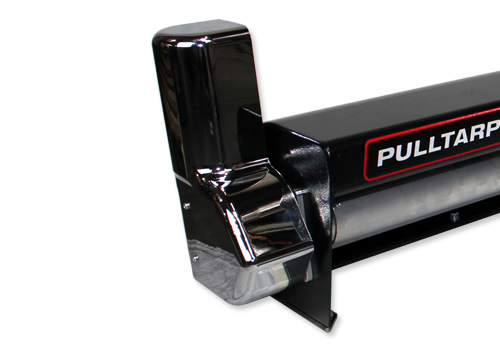
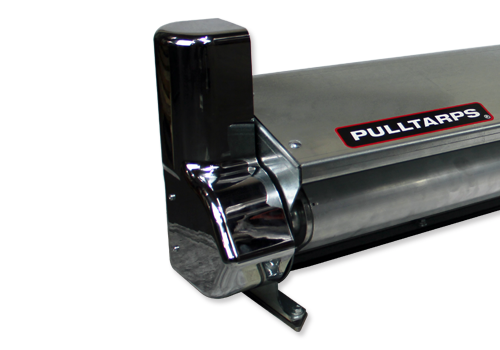
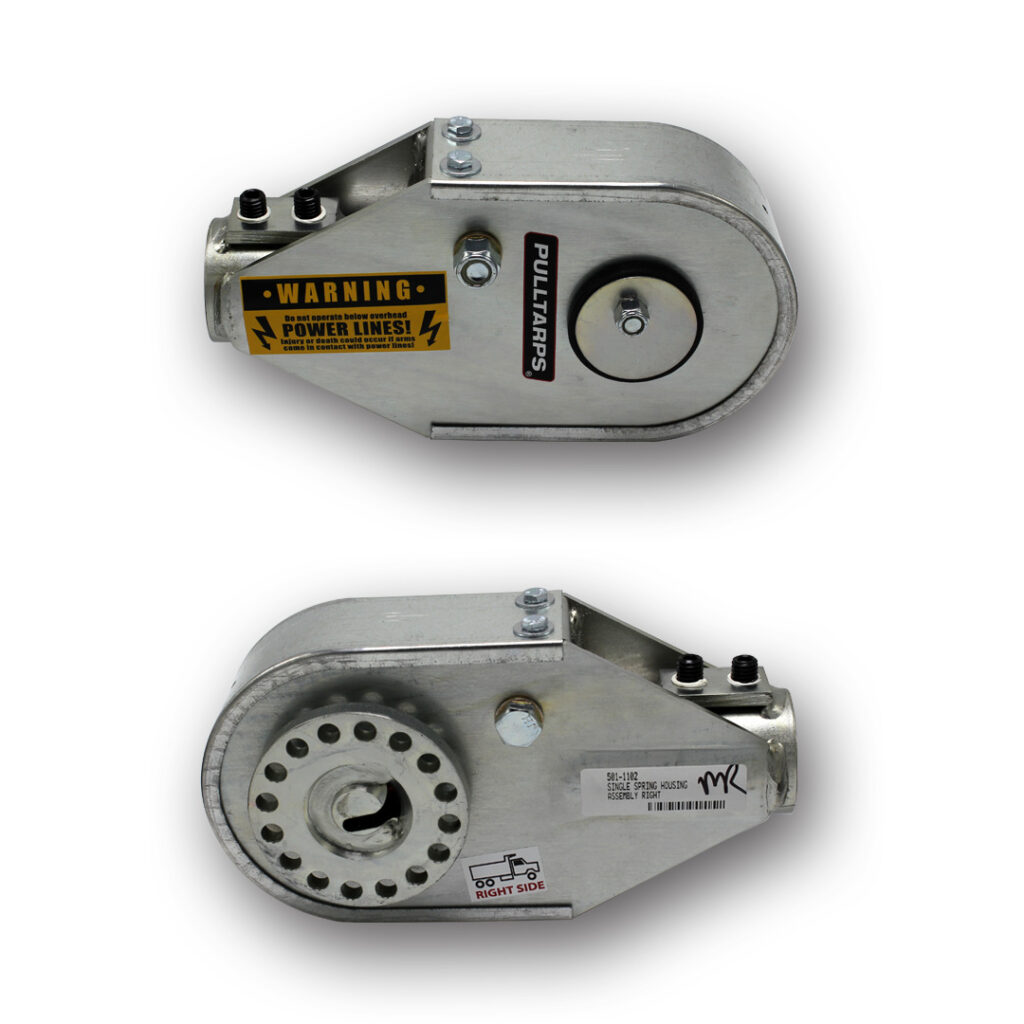
Heavy-duty 12-gauge steel housing and 1.3 HP electric motor for high-volume roll-off and hooklift fleets. Fully enclosed and built to take debris-load abuse, 5-year warranty.
Automatic · Varying Lengths
Versatile electric automatic that adapts to varying container lengths as you swap boxes. Steel housing, sealed motor, field-serviceable — a strong fit for mixed container fleets.
Semi/Manual · Open Arm
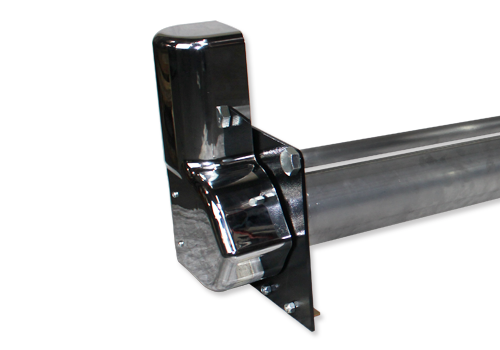
Open-arm unit for operations that swap less often or want the simpler, lower-cost option. Ground-operated and quick to throw — less housing, no climbing the container.
Final configuration depends on container length, tarp material (Vinyl, HD Mesh, Super HD Mesh, Asphalt Vinyl), and mounting hardware. Configure each system for pricing on its product page.
Roll-off and hooklift operations split on tarp style by how often containers swap. Frequent, all-day swapping rewards automatic; lower-volume routes and budget-driven setups do fine with a semi/manual cover.
Frequent Container Swaps
+
Cab-switch or ground operation — fast cover/uncover
+
Keeps pace with all-day container swapping
+
Adapts to varying container lengths
−
Higher upfront cost; requires cab wiring
Best for: High-volume waste and demo fleets swapping containers many times a day.
Lower-Volume Routes
+
Lower upfront cost, simpler service
+
No electrical to maintain
+
Ground-operated — no climbing the container
−
Manual effort — slower on frequent swaps
Best for: Owner-operators and routes that swap a few containers a day.
Still not sure? Compare all three families → or call 1-800-368-3075.
Already Have A System?
Vinyl, HD Mesh, Super HD Mesh, and Asphalt Vinyl. Sized to cover open-top container lengths from 14′ × 84″ up through 24′ × 88″. HD and Super HD Mesh hold up best to debris and scrap. Same-day shipping in most cases.
Reference
Find the right tarp system for every truck and trailer class we serve.
Compare
How the three Pulltarps system families differ and which fits your work.
Compliance
The federal rule plus a state-by-state breakdown of load-covering laws.
Questions haulers ask about tarping roll-off and hooklift trucks and their containers.
Yes — roll-off and hooklift systems are spec’d to handle the range of open-top containers you run, and an automatic system adapts as you swap between lengths. When containers vary a lot, size the tarp to your longest box and confirm the fit in the configurator before you order.
On a roll-off or hooklift, the tarp system mounts to the truck body, not the individual container, so it covers whatever box is loaded. That keeps each container legal as you drop and pick up through the day without re-rigging. Quick on/off operation is exactly what these systems are built for.

It depends on material. HD Mesh and Super HD Mesh are the picks for demolition, scrap, and C&D debris — they shed water and resist tearing on sharp, irregular loads. Vinyl gives a watertight cover for cleaner waste. Match the tarp to your toughest load so it lasts.
Yes — open-top containers carry loose debris and material that federal regulation 49 CFR § 393.100 requires to be secured and contained, with state rules on top. Every loaded container that hits the road needs a cover. See our state-by-state guide for where you run.
Both work on roll-offs and hooklifts — it comes down to how often you swap. Frequent, all-day container swapping rewards an automatic system for speed; lower-volume routes and budget-driven setups do fine with a semi/manual cover. Compare the two on our tarp systems page.
Yes — for automatic systems we recommend an authorized installer, since the body mount and any cab wiring need to be done right for warranty coverage and reliable swapping. Use the installer locator to find a nearby shop, and read the full warranty terms before you order.